
Effective Natural Techniques To Prevent Dermestid Beetles

Effective Natural Techniques To Prevent Dermestid Beetles

You can face a persistent challenge for home mite-free dermestid beetles and collections alike. So, check some reputed companies to buy guaranteed mite-free dermestid beetles for skull and bone cleaning. Also, learn the natural methods to control them. This article explores natural ways to reduce their presence and stop infestations from happening again while safeguarding fragile objects and stored commodities. The manual places a strong emphasis on environmental management, prevention, thorough inspection, and safe biological and physical methods that steer clear of harsh chemical pesticides.

Understanding Dermestid Beetles

Dermestid beetles are small scavengers that consume decomposing organic waste. When conditions are right and organic material is accessible, they frequently infiltrate dry museum artifacts, animal products, and preserved fabrics. Eggs, larvae, pupae, and adults make up the life cycle, and effective management necessitates stopping several stages and limiting food sources.

Warm, somewhat humid conditions with easily accessible trash are ideal for …

Effective Natural Techniques To Prevent Dermestid Beetles Read More

Why Countryside Dog Day Care in 2026 Should Be Your Radical and Strategic Solution for Your Urban Pups in London

Countryside Doggy Care Isn’t Optional: Why Countryside Dog Day Care in 2026 Should Be Your Radical and Strategic Solution for Your Urban Pups in London

City living isn’t neutral—it’s a slow squeeze. Horns, concrete, leashes, and screens crush a dog’s instincts, chip away at confidence, and turn natural energy into stress. For pets in Kensington, Chelsea, or Bangkok’s vertical jungles, a countryside day care isn’t a “fun weekend outing.” It’s a tactical, biologically informed intervention—a way to restore instincts, sharpen behavior, and safeguard emotional resilience against urban overload.

1. Freedom, Play, and Countryside Joy: The “Anti-City” Reset

Urban dogs live under invisible ceilings—sensory starvation baked into pavement, sirens, and leash limits. Countryside dog daycare in London demolishes that ceiling that comes due to lack of resonance, with creative, nature-engineered solutions that are innate to canine biology:

  • Environmental complexity: rolling fields, trails, streams, and varied textures that invite exploration.
  • Seeking-system activation: digging, sprinting, sniffing—the full dopamine cocktail city parks cannot deliver.
  • Structured intervals: bursts of wild activity alternated with restorative pauses prevent overstimulation.

Result: city reactivity …

Countryside Doggy Care Isn’t Optional: Why Countryside Dog Day Care in 2026 Should Be Your Radical and Strategic Solution for Your Urban Pups in London Read More
DIY vertical wall shelving ideas for small apartment cat enrichment

DIY vertical wall shelving ideas for small apartment cat enrichment

The Feline Need for Verticality

In the wild, cats are both predators and prey. This dual nature makes height their greatest ally. A high perch serves three primary psychological functions:

  • Security: From a high vantage point, a cat can monitor “threats” (like the vacuum cleaner or a playful dog) without feeling vulnerable.
  • Territory: In multi-cat households, verticality creates “social distancing.” A higher-ranking cat may claim the top shelf to signal status, while a timid cat may use it as an escape route to avoid conflict.
  • Stimulation: Height changes a cat’s perspective on their environment, turning a boring living room into a complex 3D hunting ground.

Planning Your “Cat Superhighway”

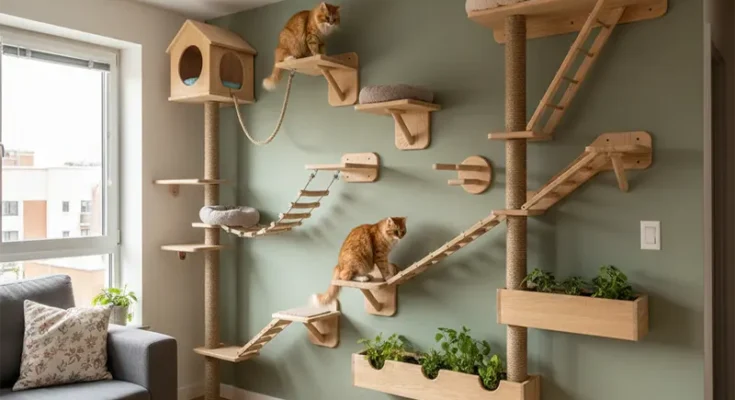
Before you pick up a drill, you must think like a cat. A single isolated shelf is a “dead end.” A “Cat Superhighway” is a continuous circuit that allows a cat to travel across a room without touching the floor.

The

DIY vertical wall shelving ideas for small apartment cat enrichment Read More
Lifespan and long-term care costs of African Pygmy Hedgehogs

Lifespan and long-term care costs of African Pygmy Hedgehogs

The Lifespan Reality: A Sprint, Not a Marathon

In the wild, a fennec fox or a wild hedgehog might only survive 1 to 3 years due to predation. However, in a well-managed captive environment, the average lifespan is 4 to 6 years, with some rare “super-seniors” reaching age 8.

Because of their high metabolic rate, hedgehogs age rapidly. By the time a hedgehog reaches 3 years old, they are biologically considered “seniors.” This is the critical threshold where the cost of ownership typically spikes, as age-related illnesses become almost a statistical certainty rather than a possibility.

Initial Setup vs. Annual Maintenance

The first year of hedgehog ownership is always the most expensive, but many owners underestimate the recurring “invisible” costs.

Upfront Costs (Initial Year)

  • The Enclosure: A minimum of 4–6 square feet of flat floor space. Modern 2026 standards recommend large clear-bottomed vivariums or modular acrylic pens ($150–$250).
Lifespan and long-term care costs of African Pygmy Hedgehogs Read More
Cost of in-home cat sitting vs. professional cat boarding in 2026

Cost of in-home cat sitting vs. professional cat boarding in 2026

The Pet Care Economy in 2026

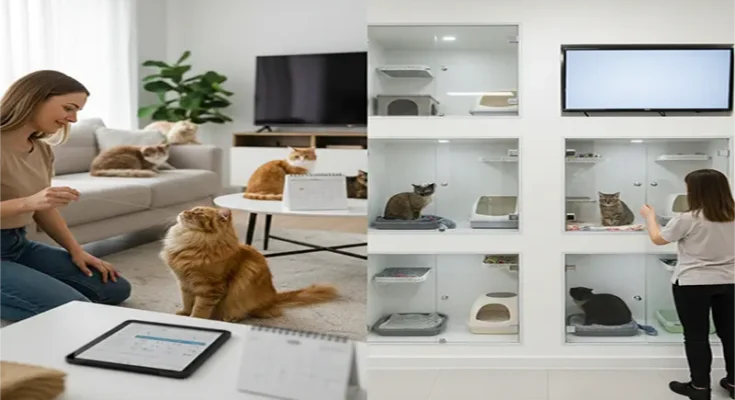
The “humanization of pets” trend that began a decade ago has reached its peak in 2026. Cat owners are now more willing than ever to invest in high-quality care, but inflation has pushed baseline prices upward. While app-based “gig” platforms still exist, they have largely shifted toward specialized, vetted services to compete with boutique local businesses. These local firms offer higher levels of insurance, staff training in feline behavior, and sophisticated tech integration, making professional cat care a premium service.

In-Home Cat Sitting: The “Luxury of Familiarity”

For the majority of cats—territorial creatures by nature—the primary benefit of in-home sitting is the lack of environmental stress. In 2026, this is considered the “gold standard” for behaviorally sensitive or elderly cats.

Pricing Structure

  • Standard 30-Minute Visit: Expect to pay between $32 and $48 per visit. This typically covers feeding, litter scooping, and brief social
Cost of in-home cat sitting vs. professional cat boarding in 2026 Read More